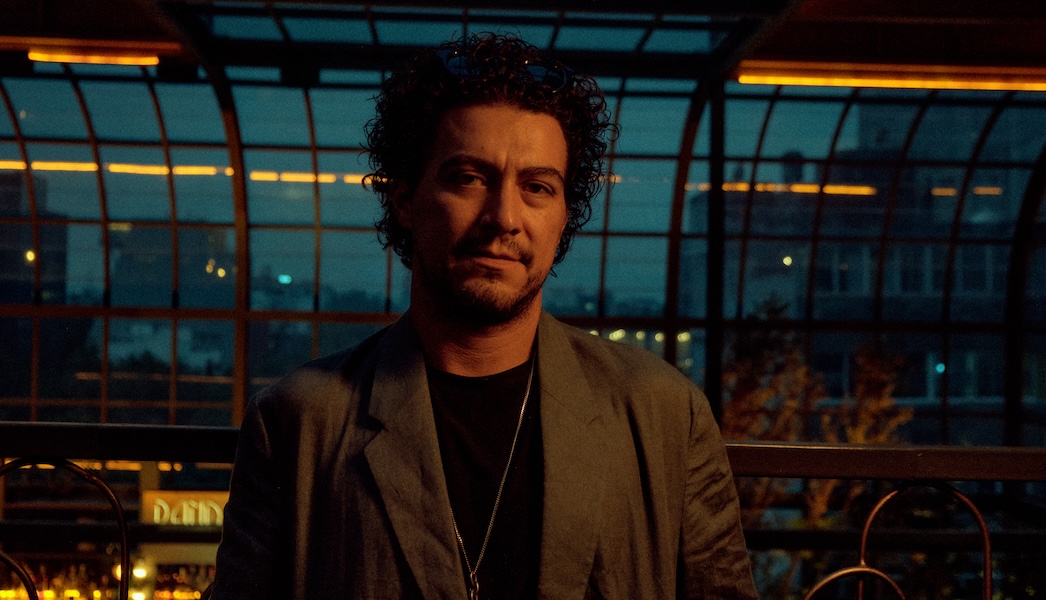
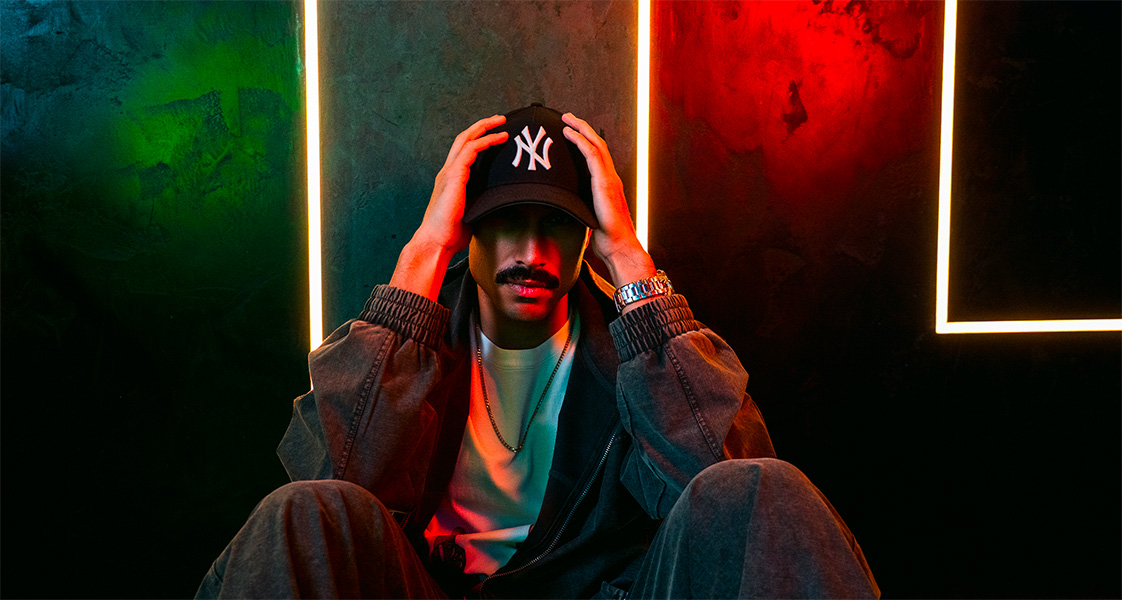
Known in Mexico’s creative scene for his work as a chef and experiential curator, EMMË moves between gastronomy, music and immersive culture with a multidisciplinary approach shaped by projects including Mesa Nómada and collaborations within the Burning Man ecosystem.
A long-time musician and guitarist, his relationship with sound extends far beyond the DJ booth.
Now stepping further into his electronic music project, EMMË returns with ’Factor 2,’ a five-track EP released via Happy Accident, the label founded by acclaimed Mexican producer Metrika. Exploring an eclectic sonic palette and narrative-driven production, the release marks a new chapter in his musical journey. We caught up with EMMË to talk about ’Factor 2’, his creative crossover between food and music, and the process behind his latest release.
WWD: Hi EMMË, welcome to When We Dip and congratulations on your release ‘Factor 2.’ How does this make you feel?
Thank you so much!! It genuinely feels like a release in every sense of the word. The EP has been living inside me for a while and putting it out into the world feels like finally exhaling. There’s a mix of vulnerability and excitement that I wasn’t fully expecting. It’s my debut EP, so it carries a lot of weight, but also a lot of joy. I’m just really grateful people are listening.
WWD: What do you want listeners to take away from ‘Factor 2?’ Is it a shared journey or something more personal?
It’s both, honestly, and I think that tension is part of what makes it interesting to me. It started as something deeply personal: a return to the feelings I had when I first started making music as a kid, that pure creative state before you know enough to second-guess yourself. But the moment you put something on a dancefloor, it stops belonging only to you. My hope is that whoever listens finds their own version of that feeling, something that takes them back to a moment when they were just… free. That’s the real takeaway: Factor 2 is about remembering that the most fun, authentic, and creative ideas come when we go back to thinking like children.
WWD: What can you tell us about the story behind your tracks — our favourite was ‘Smile,’ but we heard that ‘Factor 2’ has a very deep connection with your youth?
I love that ‘Smile’ got you! It’s one of those tracks that kind of sneaks up on you with its psychedelic bass and playful textures. It does exactly what it says: it makes you smile.
But the title track, ‘Factor 2,’ is where the whole EP finds its emotional core, and there’s actually a very specific, very ridiculous story behind it. Back when my friends and I were in bands together, one of us, completely unprovoked, would suddenly break into this invented, half-robotic dance while singing “Factor 2, 2, 2… Factor 2, 2, 2” — with total conviction and absolutely no explanation. We never knew what ‘Factor 2’ meant. We still don’t. But we laughed so hard, every single time.
Roque, one of the co-producers on this record, was part of that crew. At some point we made each other a promise: that when we turned 40, when we were average office workers with average lives, we would walk into a boardroom full of very serious lawyers and do the Factor 2 dance together. No context. No explanation. Just to prove to ourselves that we never lost that thing. That innocence. That good energy you carry at that age before the world tells you to be serious.
That’s what this EP is really about. It carries the story of the younger version of me: the kid who played in rock bands from the age of 15, who made music for years just because it felt like the most alive thing he could do. I even brought in a guitar, which connects directly to that earlier chapter of my life. The whole EP is a love letter to that version of myself, and an invitation for everyone to revisit theirs.
WWD: Releasing on Happy Accident feels like a great choice. What made it the right home for the EP? And how would you describe your collaboration with top Mexican producer Metrika?
I should be honest about something: Happy Accident chose me, and that meant more than any deal I could’ve chased. There’s a very different energy when someone believes in your project enough to come to you, and that’s exactly what happened with Diego. Metrika has supported me enormously throughout this whole process, and the trust between us is real. He’s not just a collaborator — he’s someone who genuinely pushed me to go further.
Happy Accident to me, represents the modern movement of electronic music coming out of Mexico City right now, and I’m proud to be part of that conversation. It’s a label being built with intention, and that resonates deeply with how I approach everything I do in music, in food, in curation. When the values align, the decision makes itself.
WWD: You play instruments as well as produce — how does that influence your approach in the studio and in your showcases?
It changes everything. I’ve been playing in bands since I was 15, so music always felt physical and emotional to me before it ever felt technical. When I came back to producing and DJing five years ago, that background completely shaped how I approach sound: I think in terms of feeling and narrative first, arrangement second.
In the studio, it means I’m not afraid to bring in organic elements where other producers might stay fully in the box. “Darkest Sun,” for example, opens the EP with guitar that warmth and texture sets the emotional tone for everything that follows. It’s a deliberate choice to root something electronic in something very human.
Live, that sensibility translates into something I find really exciting: improvisation. I’m not playing a fixed set from start to finish — there’s room to read the room, to make decisions in real time, to let the moment breathe. That means what happens on a given night is genuinely unique. The crowd that was there on that specific evening witnessed something that will never be repeated exactly the same way.
WWD: We were told that you are also a renowned Chef in México, leading projects like Maxa Camp during Burning Man and Mesa Nómada. How do you see music, gastronomy, and curation merging and how has this influenced you personally and artistically? In the specific case of Maxa Camp, how do you see these worlds informing each other?
I’ve never really seen them as separate disciplines — they’re all tools for creating an experience. At their core, gastronomy, music, and curation are all about sequence, rhythm, and emotion. A tasting menu and a DJ set have more in common than people think you’re guiding someone through different states, building tension and release, knowing when to surprise and when to comfort.
With Mesa Nómada, the dinners are literally designed around that idea the sound, the food, and the space are curated together to create a single narrative. Nothing is an afterthought.
Maxa Camp at Burning Man is where that philosophy gets pushed to its most extreme and most beautiful form. You’re in the desert, the boundaries between disciplines completely dissolve, and what remains is just: are people having a transcendent experience? The kitchen and the DJ booth feed each other there in a very literal sense — the energy of the music shifts how people eat, and the mood at the table carries onto the dancefloor. It’s become one of the most formative spaces for me creatively, because it strips everything back to what actually matters.
WWD: Is there a specific festival or event that has changed the way you see your role as a musician?
Burning Man, without question — it rewired how I think about what music is for. But I’d be doing a disservice if I didn’t mention the full arc. Growing up going to rock festivals in Mexico City planted the seed. Then discovering spaces like Garbicz, Gardens of Babylon, MEL in Portugal, those showed me what it looks like when a community and a sound really find each other. EDC Mexico has that massive collective energy that reminds you of music’s power to unite people across all kinds of differences. And then there are the smaller, more intimate ones like Trópico in Acapulco where something very quiet and profound happens because everyone is truly present. Each of those experiences added a layer to how I understand my role: not just as someone who plays music, but as someone who holds space.
WWD: Anything else you’d like to share with our readers?
Just that I’m genuinely excited about what comes next. I’m already composing new tracks — and they’ll move across different genres, which feels completely natural to me. We’re always evolving as human beings and as creative people, so it would make no sense for the music to stay in one place. New forms of expression are inevitable, and honestly, that’s the most exciting part.
‘Factor 2’ is a debut, but it’s also a statement of direction. If this EP reaches someone at the right moment and reminds them of who they used to be before life got complicated — that’s everything. Thank you, When We Dip, for this space. It means a lot!
WWD: Our pleasure, thanks for the chat 🙂
The ‘Factor 2’ EP is available here