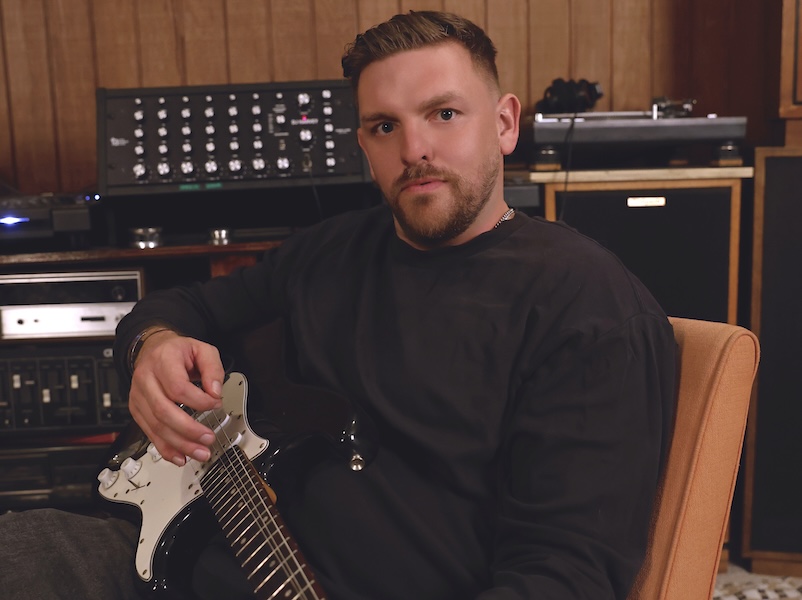
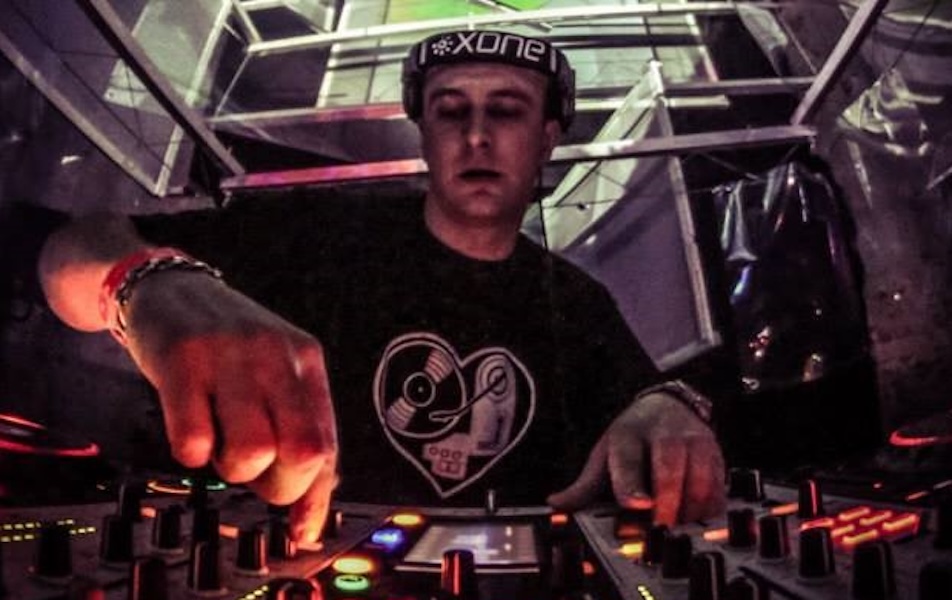
Nash Angeles isn’t just a debut album – it’s the sound of a musician stitching together the places, people and scenes that shaped him. From humid Tennessee summers spent jamming with blues players to late-night warehouse revelations in downtown Los Angeles, his journey has always been about collaboration, curiosity and crossing musical borders.
Gryph stops by for a chat about the psychedelic thread running through his work, the Point Winona collective that sharpened his confidence, and the emotional intention behind an album built to feel good everywhere – from a car stereo to a warehouse rig.
WWD: How did growing up in Tennessee as a rock and blues guitarist shape the musician you are today, before dance music even entered the picture?
I think one of the biggest takeaways from those rock and blues days is learning and loving to collaborate. It is only so much fun rocking out by yourself. Once I started getting better and more confident I really started looking for other musicians to play with. You really advance musically, whether it be technique or skill, when you are jamming and collaborating with people from all walks of life.
WWD: What was the moment in Los Angeles when you realised dance music wasn’t just an interest but a new creative home?
It was while I was living in Venice in 2016. One of my best friends in Venice kept asking me to go to these electronic parties in DTLA for several months, but I just kept putting it off because at that point I had a pretty limited and naive view of what dance and electronic music was and could be. I finally went down to a warehouse with him on a Sunday night and I was just blown away. The tracks were heavy, funky, psychedelic and at some points delicate. That’s when I knew.
WWD: Nash Angeles is described as “musical worlds colliding.” How do you personally navigate blending rock, blues, soul, disco, jazz-funk and house without losing your identity?
That’s a great question. I think when you listen to this album in its entirety you will hear a common motif of subtle to all-out psychedelia, coupled with hard, funky and groovy bass lines and live instrumentation. I feel like I can navigate all those genres and blend them together as long as those elements are present to some extent in every track. It helps that the Point Winona studio crew doesn’t think so strictly in terms of genre, but in general musical inspiration.
WWD: What was the initial spark or emotional anchor that set the direction for the album?
I had been writing and recording on my MacBook for three to four solid years before Tavish DJ asked me to be a part of the Point Winona Sound Library studio collective. That is when Dave Aju and I finally got to sit down and discuss this project. We had always said we would do a disco house album or an album in general when the time was right. We had no idea that these tracks would turn into what they all have become, but the more we worked on them the more cohesive and complementary they became to each other. I remember about six months in which we both looked at each other after a session and said, “Damn, we got an album.”
WWD: How did your collaboration with Dave Aju shape the sound, arrangements, or workflow of the record?
Dave Aju is an absolute genius in the fields of production and arrangement, especially in the dance sphere. I remember one of our first sessions I was showing him what would become ‘Body Body’ and I had this jazzy major chord at the end of every eighth bar or so. He looked at me and said, “You gotta cut that resolve shit out if you want to make it on the dance scene.” We still laugh about it. But it was little lessons like that and him really taking control of helping me arrange this entire album. We always seemed to be on the same page and the workflow was just insane. I can’t say enough about him as a musician and as a friend.
WWD: You brought in a cast of vocalists and session players. What did live instrumentation allow you to express that electronic production alone couldn’t?
Once I started exploring and listening to dance I really gravitated to disco and house because of the vocals and live instrumentation. I could really feel the soul in that music and connect with the genre given my background. With that said, I also loved the electronic aspect of a rave or festival. To me, the music hits so hard and really transcends me to another dimension. But I feel like listening to it in a car or on small speakers can really make it fall flat and robotic. So, I thought: what if we could combine all those musical aspects into one album that can sound good anywhere — whether it be your car, a Bluetooth speaker, a vinyl rig, a warehouse rig, any rig at any time.
WWD: The album moves from disco to dub, Italo to R&B, spiritual jazz to house. What guides your hand when you’re stitching these worlds together?
Creative repetition and being cognizant that we are creating a journey for the listener. We developed these songs fairly quickly but let them expand and mature for so long that we knew them like the back of our hands. It made it easier to create a journey that makes musical sense to the listener. I guess you could call it “Sonic Logic,” ha! Tavish DJ and Rodney also helped us make executive decisions at the eleventh hour that really brought it all together.
WWD: The opener, ‘Summer Nights’ feels like a warm glide into the album’s universe. What story or mood were you setting with this track?
This track is kind of my homage-to-my-roots track. Its setting is Memphis during the hot, humid summer – cruising with friends, BBQ’ing and dancing – blended with the quintessential Point Winona pool-party posse here in Los Feliz, LA. You can really hear my blues and jazz influence on this track and I thought it was important that I start the album with where I started.
WWD: ‘Body Body’ leans deeper into the club with dubby rhythms and jazz piano. How did this track evolve in the studio?
This track was the first track we started on because it had the most club/dance vibe from the rest of the tracks. It started as a standard house track and then we kept layering synths and arps and it started taking on a life of its own. After we added the vocals, I kept thinking to myself that we needed some kind of live instrumentation to complement Dina Moursi’s vocals on the track. The next day I was in the DJ booth with a close friend, Alex Ayers, and he played this incredible record with a blistering house solo and I was like, that is exactly what this track needs. I called up Derrick Lighting later that week and he came into the studio to work on some saxophone, but he was able to lay down the keys solo for us — in one take. He is one of the best studio players I have ever seen.
What was the chemistry like with Shirtz and how did the glossy nu-disco feel come together?
Shirtz was my roommate when I lived in Venice. We had an acoustic duo while we lived together. We have been writing, recording and playing together for 10 years now, so it was one of the easiest collabs of the entire album. We didn’t even plan to have vocals on that track. He just happened to be in the studio while we were working on it and he started doing this falsetto melody. Dave Aju and I looked at each other and went straight to setting up the mic rig. We wrote the lyrics on the spot and Shirtz knocked it out that same night. Another highlight of the recording process.
WWD: Dina brings such a luminous soul to the track. What drew you to her voice, and what was the emotional intention behind this collaboration?
Dina was the vocalist on ‘Body Body’ and ‘Summer Nights,’ but she really knocks it out of the park on ‘Dangereuse,’ which she translated into French for the Franco-Italo disco burner of a lifetime.
WWD: This one has a romantic, mid-tempo house feel with guitar flourishes. What inspired its mood and palette?
A lot of my favorite DJs and peers in LA are Italo-heads as well – it’s just such a great form of proto-house party music. Hearing legends like Danielle Baldelli and Beppe Loda dropping gems that had guitar solos in them was a huge inspiration. Homies like Chase Aldridge also schooled me a lot on tracks that could be electro, disco, and rock-oriented like that.
WWD: The strings on ‘Pierce’ hit a very emotional register. What were you trying to capture here? It’s a drift into a deep, star-lit house. Where did this track come from creatively?
This track really came out of left field. It was an overcast LA day and I just felt like laying down something moody. I started with the keys and the bassline and a few other textures. Dave Aju and I started experimenting with the Roland GR-55 guitar synth, so everything you hear is technically a guitar riff or chord run through that. Our dear harpist friend and fellow musical visionary Caroline Campbell came in and blessed the track. Just by chance, Piers Harrison was staying at Point Winona and popped his head in the studio and said he loved it, so we called it “Pierce.”
WWD: The finale folds spiritual jazz trumpet into broken beats. Why did this feel like the right closing statement for the album?
I just think this track really brings it back home to my southern blues and rock roots. It’s kind of a coming-home of sorts at the end of this sojourn. It’s part electronic dub session, smooth-jazz landing, and a post-punk finish that Dave Aju demanded be in the ending – to speak to those deep roots and still be politically relevant today.
WWD: Your influences range from the Mizell Brothers and spiritual jazz to yacht rock, deep house and The Doors. How do these seemingly distant worlds coexist in your head?
To me it’s all just music, and the genre lines naturally blur. Luckily that’s the same for Dave Aju, Elbow Grease, and the whole Point Winona studio collective.
WWD: You blur the line between songwriter craftsmanship and dance-floor hypnosis. How do you balance narrative songwriting with groove-driven production?
It all starts with chord progression for me. From there the groove gets instilled in the bass line and rhythm section. Aju always touts my bass-line writing abilities, so I guess I’ll take that, haha.
WWD: What emotional through-line connects the album’s nine tracks?
I think if I were to be honest with myself and with you, the emotional intention that connects the nine tracks is the longing to be seen as an artist that loves music and this scene and this city – coupled with just having a good-ass time and keeping a positive vibe.
WWD: How did being part of the Point Winona Sound Library Vol. 1 and the Elbow Grease community influence your confidence or direction going into the album?
You have no idea what that project, Elbow Grease, and everyone else involved had on my confidence to move forward and release this album. The album was, for all intents and purposes, a completed product. I was definitely second-guessing myself. But after seeing how well that record did and the camaraderie with all the artists on that record – and the love I got from them – it really gave me the confidence to push forward with the release.
WWD: What do you hope dancers, listeners, or fellow party animals feel when these tracks hit a system?
I just hope they feel joy and warmth. I also hope that I can take them on a cerebral journey and they can get lost in this album and forget about this planet for forty-five minutes at a time.
WWD: With your background as a guitarist and vocalist, how do you imagine performing this material live?
I feel there are a plethora of combinations on how this could be performed live. I do think for immediate performances, backing tracks with live vocals and instrumentation could work great. Down the road I would like to see an entire live band perform, but that is a colossal production task to take on. So, I’ll cross that bridge when that opportunity arises.
WWD: Now that ‘Nash Angeles’ is out in the world, where is your creative compass pointing?
I don’t want to repeat myself, that is for sure. I have an entire separate soul-funk band project with Dave Aju that we’re also hyped on. That will definitely be my next project release with him. We are also working on my next album already that’s leaning in a new-wave direction.
WWD: Sounds amazing, thanks for the chat 🙂
The ‘Nash Angeles’ album is available here